February 20, 2026
Ramin Popal

You're running a dropshipping business while juggling product research, order fulfillment, customer service, and marketing campaigns. The manual work never stops, and scaling feels impossible when you're stuck managing every detail yourself. Understanding how to succeed in dropshipping means recognizing that artificial intelligence can automate time-consuming tasks, freeing you to focus on growth and strategy. This article reveals the best AI tools for dropshipping that can help you automate operations, optimize product selection, streamline customer communication, and scale your store without burning out.
That's where the AI Store Builder comes in as a practical solution for entrepreneurs serious about automation. Instead of piecing together multiple platforms and plugins, this tool helps you build and manage your dropshipping store with intelligent features designed to handle product imports, inventory updates, and even content creation. Whether you're launching your first store or expanding your existing business, AI Store Builder automates manual processes, turning them into efficient systems that give you more time to refine your strategy and connect with customers.
AI Store Builder addresses this by consolidating store creation, product imports, supplier connections, and inventory management into a single system that launches fully operational Wix stores in under 10 minutes with pre-loaded trending products.

Most beginners search for AI tools hoping to speed up their path to profit. Instead, they encounter a fragmented ecosystem where each platform handles one narrow task, product research tools suggest ideas without building stores, store builders create websites but skip validation, ad generators produce creatives but ignore fulfillment, and customer service bots only activate after sales begin. Before earning a single dollar, newcomers face pressure to subscribe to multiple disconnected services, each with its own dashboard, learning curve, and monthly fee.
Monthly subscriptions accumulate faster than most people anticipate. A product research tool costs $30, a store builder costs $29, and email automation costs $20, and suddenly the low-risk business model carries a $100+ monthly commitment before the first customer arrives. That financial pressure creates anxiety around every decision because switching tools later means migrating data, relearning workflows, and potentially losing momentum during the transition. The psychological weight compounds the financial one. Choosing a tool stack feels permanent, even when it isn't. Many delay launching entirely, paralyzed by the fear of committing to the wrong configuration. They spend weeks comparing features, reading conflicting reviews, and second-guessing whether they've covered all the necessary functions. Momentum dies in the research phase.
It's rarely clear which tools are essential and which are optional. Top tool lists contradict each other, reviews reflect different use cases, and many recommendations stem from affiliate incentives rather than actual necessity. A beginner has no reliable way to distinguish between what they need now and what might matter six months from now. The result is either over-investment in unused features or under-investment that creates gaps later. According to MIT's 2025 AI Report, 80% of AI projects fail to deliver measurable business value, often because teams prioritize technology before understanding the problem it should solve. The same pattern appears in dropshipping. Beginners assemble tool stacks based on capability lists rather than workflow needs, then discover the tools don't communicate with each other or address the actual bottlenecks in their process.
The rapid growth of the dropshipping industry has intensified this fragmentation. Global Market Insights projects the global dropshipping market will reach $343 billion by 2026, driven by social commerce, mobile shopping, and cross-border expansion. That scale attracts intense competition, not just among sellers but among software providers racing to capture market share. Each company builds specialized tools designed to solve one piece of the puzzle, creating an ecosystem where comprehensive solutions are rare and partial ones are abundant. The primary bottleneck isn't a shortage of automation. It's an overabundance of disconnected solutions that must be stitched together before meaningful progress happens. Beginners waste weeks assembling a stack when they should be validating products and learning how customers think. The tools promise efficiency but deliver complexity.
Platforms like AI Store Builder address this by consolidating store creation, product imports, supplier connections, and inventory management into a single system. Instead of coordinating multiple subscriptions and learning separate interfaces, users can launch fully built stores in minutes with pre-loaded trending products and automated updates. The focus shifts from tool assembly to actual business execution, reducing both the financial commitment and the cognitive load that typically prevent people from starting. But understanding which functions truly need automation requires knowing where AI adds value and where it doesn't.
AI excels at execution speed, but cannot replace the judgment that determines whether a store succeeds. The distinction matters because most beginners misallocate time, focusing on tasks AI should handle while neglecting decisions only humans can make. According to Dropship Spy's 2025 automation guide, AI can automate up to 80% of repetitive dropshipping tasks. That percentage sounds liberating until you realize the remaining 20% contains every decision that actually differentiates your business from thousands of identical competitors.
Product research becomes dramatically faster when AI scans marketplace data, trending searches, and competitor listings. Instead of manually scrolling through supplier catalogs for hours, you start with a filtered list of items already gaining traction. The system identifies patterns in sales velocity, review sentiment, and pricing gaps that would take days to spot manually.
Content generation removes the blank-page problem entirely. Product descriptions, email sequences, landing page copy, and blog posts materialize in seconds. A new store can launch with professional-looking content without hiring writers or spending weeks crafting every word. The baseline quality is sufficient for testing whether products resonate with customers.
Ad creative production scales in ways manual design cannot. AI generates dozens of headline variations, image treatments, and format options simultaneously. Instead of designing three ad concepts and hoping one performs, you test fifteen variations within the same timeframe, learning what messaging connects before exhausting your budget.
Customer service automation handles the repetitive inquiries that consume hours but require no nuanced judgment. Chatbots answer shipping questions, provide order updates, and resolve basic issues without human intervention. For a solo entrepreneur testing products, this creates the appearance of availability without the need to constantly monitor messages.
Data analysis reveals behavioral patterns invisible in raw numbers. AI identifies which traffic sources convert best, which products attract repeat buyers, and which customer segments respond to specific messaging. These insights emerge from thousands of transactions processed faster than any manual review could accomplish.
Business strategy cannot be automated because AI has no opinion about what you should build or why customers should care. Selecting a niche requires understanding market gaps, competitive positioning, and your own capacity to sustain interest over months of iteration. The tool can suggest trending products, but it cannot decide whether you're entering a saturated market or carving out defensible space. Supplier reliability determines customer satisfaction more than any other operational factor. AI can recommend products, but it cannot guarantee shipping times, verify product quality, or ensure stable inventory. A tool might surface a trending item, but if the supplier ships late or delivers inconsistent quality, your reputation suffers regardless of how well the automation performed.
Platforms like AI Store Builder address this by pre-vetting supplier connections and automating inventory updates, compressing the gap between product selection and reliable fulfillment. Instead of testing suppliers individually, users launch with established relationships already embedded in the system, reducing the friction that typically stalls new stores during their first sales.
Conversion optimization extends beyond automated outputs. AI can generate landing pages, but trust signals, pricing psychology, brand perception, and market fit require human interpretation. Two stores selling identical products with identical copy will convert differently based on factors the automation cannot control: how the brand presents itself, whether the pricing feels fair, and whether customers believe the store will still be open next month. Brand positioning emerges from consistent decisions over time, not generated content. A recognizable brand requires messaging coherence, customer experience design, and strategic choices about what you stand for and what you reject. AI can produce individual assets, but it cannot build the cumulative trust that makes customers choose you over cheaper alternatives.
The most productive mental model treats AI as a force multiplier, not a business partner. It compresses timelines, reduces manual labor, and surfaces insights faster than human analysis. But it cannot replace the strategic thinking that determines whether the business you're building has a reason to exist beyond the fact that automation made it easy to launch. The real constraint isn't whether AI can handle a task, but whether you're spending time on decisions that actually matter.
Speed beats sophistication when market windows close faster than most people can build. Dropshipping success depends less on having the best tools and more on executing the fundamentals before opportunities vanish. The stores that win aren't necessarily the most technically advanced. They're the ones that launched while others were still comparing features.
Product trends move faster than traditional business timelines allow. A product surging on TikTok this week might saturate by next month. According to Shopify's 2024 commerce trends report, viral products now have an average market relevance window of just 4-6 weeks before competition drives margins below viability. If your launch process takes eight weeks, you're building a store for a trend that's already dying. The math is unforgiving. Every day spent configuring integrations, designing pages, or researching suppliers is a day your competitors are collecting customer data and refining their messaging. They learn what converts while you're still setting up payment gateways. By the time you launch, they've already tested three ad variations and identified which demographics respond.
Most beginners underestimate how much momentum matters in the early days. The first-to-market store captures attention when demand is highest, and competition is lowest. Pricing power exists in that narrow window. Wait too long, and you enter a race to the bottom where only volume players survive. Platforms like AI Store Builder compress this timeline by launching fully operational stores in under ten minutes, complete with pre-loaded trending products and supplier connections already configured. Instead of spending weeks assembling infrastructure, users go live while the opportunity still exists, immediately shifting focus to customer acquisition that actually generates revenue.
No amount of trend analysis guarantees a product will sell. Tools can surface what's gaining traction elsewhere, but your specific audience might not care. The only validation that matters is whether people hand over money when you ask them to. The mistake is treating product selection as a research problem when it's actually a testing problem. You don't need perfect confidence before launching. You need enough signal to justify a small ad spend, then let customer behavior tell you whether to scale or pivot. Stores that wait for certainty never launch. Stores that test quickly learn what works.
A visitor's first impression determines whether they explore your catalog or close the tab. Shoppers evaluate credibility in seconds, scanning for signals that you're legitimate and will deliver what you promise. Poor design, vague policies, or missing contact information trigger immediate skepticism. According to Baymard Institute's 2024 checkout usability study, 17% of customers abandon purchases because they don't trust the site with their credit card information. That distrust stems from presentation, not actual security. A store can have enterprise-grade encryption but lose sales because the design feels cheap or the return policy is buried.
Social proof matters more than most beginners realize. Customer reviews, testimonials, and evidence that real people have bought and received products reduce perceived risk. A store with zero reviews asks customers to take a leap of faith. A store with even modest social proof demonstrates it has successfully fulfilled orders before. Brand coherence also influences trust. Consistent visual design, professional product photography, and clear value propositions signal that someone invested effort into building a real business. Inconsistent fonts, mismatched images, or generic descriptions suggest a hastily assembled operation that might disappear after collecting payment.
A store can nail acquisition and still fail if products arrive late, damaged, or not as advertised. Shipping speed directly impacts satisfaction and the likelihood of repeat purchase. Customers ordering from unfamiliar stores already carry anxiety about whether the product will arrive. Every day beyond the expected delivery window amplifies that anxiety. According to Convey's 2024 consumer study, 38% of customers won't buy from a retailer again after a single late delivery.
Product quality consistency matters just as much. A supplier might ship perfect items for the first ten orders, then substitute lower-grade versions without notice. You won't know until angry customers start demanding refunds. By then, your reputation has already taken damage that's difficult to repair. Returns and customer service responsiveness also shape long-term viability. Customers remember how you handle problems more than they remember flawless transactions. A store that responds quickly, processes refunds without argument, and takes responsibility for issues builds trust that turns one-time buyers into repeat customers.
The pattern is consistent across successful dropshipping stores. They didn't launch with perfect setups. They launched with functional ones, then improved based on what customers actually did rather than what they predicted customers would do. The stores that fail often have better tools, more research, and more sophisticated strategies. What they lack is speed. They optimize before they have data to optimize against. They perfect before they validate. They plan when to test.
The businesses that break through aren't the ones with the most advanced technology. They're the ones that got to market first with something people wanted, presented it in a way that felt trustworthy, and delivered it reliably enough that customers came back. But knowing which tools actually accelerate those outcomes requires seeing the full landscape of what's available and what each one genuinely solves.

AI Store Builder creates a fully functional Wix dropshipping store for you in under 10 minutes, removing the need to piece together research tools, designers, and supplier integrations. Each store comes preloaded with 20 trending products, sourced from vetted suppliers, and structured for immediate sales. The platform also includes a comprehensive dropshipping course, live support calls, and community access, allowing beginners to move from idea to launch without technical setup or product hunting.

Analyzes data from marketplaces, ads, and social platforms to identify products gaining traction. Its AI highlights emerging trends early and provides insights into demand, competition, and potential profitability. According to Dropship Spy Blog, AI-powered tools can reduce product research time by up to 70%, compressing weeks of manual analysis into hours of focused validation.
On ad intelligence, tracking high-performing campaigns across platforms like TikTok and Facebook. Examining real advertising activity, it helps validate whether a product is actively converting in the market rather than just trending in search volume.

Combines product discovery with competitor analysis. Users can explore trending items, review store examples, and evaluate potential niches before committing to inventory or marketing spend.

Provides competitive insights into other stores, including estimated sales data and performance indicators. Its AI search features let users identify products from images or videos, speeding up validation when you spot something promising but don't know its source.

Specializes in marketplace research, particularly for platforms like eBay and Amazon. It analyzes competitor pricing, demand trends, and listing performance to inform product selection for sellers operating across multiple channels.

Integrates AI directly into the Shopify ecosystem, assisting with product descriptions, store content, and operational tasks. It streamlines setup for users committed to Shopify as their platform, but still requires manual configuration of themes, apps, and payment processors.

Generates websites automatically based on user inputs about business type and style preferences. It reduces the design burden while maintaining flexibility for customization, though users still need to source products and establish supplier relationships independently.

Uses AI to generate WordPress-based ecommerce sites, including layout, structure, and content suggestions. It suits users who want WordPress functionality without building from scratch, though plugin management and hosting configuration remain manual tasks.

Offers tools for quickly importing products and building stores, as well as automation features for ongoing operations. It helps reduce manual listing work during setup, but requires users to manage multiple supplier integrations separately.

Focuses on rapid Shopify store creation, generating a ready-to-use storefront with products and layout in a short time frame for entrepreneurs prioritizing speed over customization depth.

Specializes in AI-optimized product pages designed to improve conversions. It analyzes successful layouts and copy patterns to produce high-performing listings, though it focuses on presentation rather than on underlying product validation or supplier reliability.

Generates advertising visuals and copy tailored for social platforms. It produces multiple creative variations for testing, allowing marketers to identify winning ads faster without hiring designers or copywriters for every iteration.
A long-form AI writing platform widely used for marketing content, including product descriptions, blog posts, emails, and brand messaging. It handles the volume of content needed to populate a new store, but cannot replace the strategic positioning decisions that make messaging resonate.

Focuses on short-form marketing copy such as product descriptions, headlines, and ad text, helping stores populate listings quickly without staring at blank pages for hours.

Tracks successful TikTok advertising campaigns and user-generated content trends. It provides inspiration and competitive intelligence for social-first marketing strategies, showing what's currently working rather than what worked six months ago.

Convert text prompts into promotional videos, enabling rapid production of ad creatives without filming or editing expertise. Video ads typically outperform static images on social platforms, but production speed determines how many variations you can test.
Automates order processing, inventory updates, and supplier synchronization beyond its store-building capabilities. It reduces manual workload once sales begin, though users still need to monitor for supplier issues or inventory discrepancies that automation cannot catch.
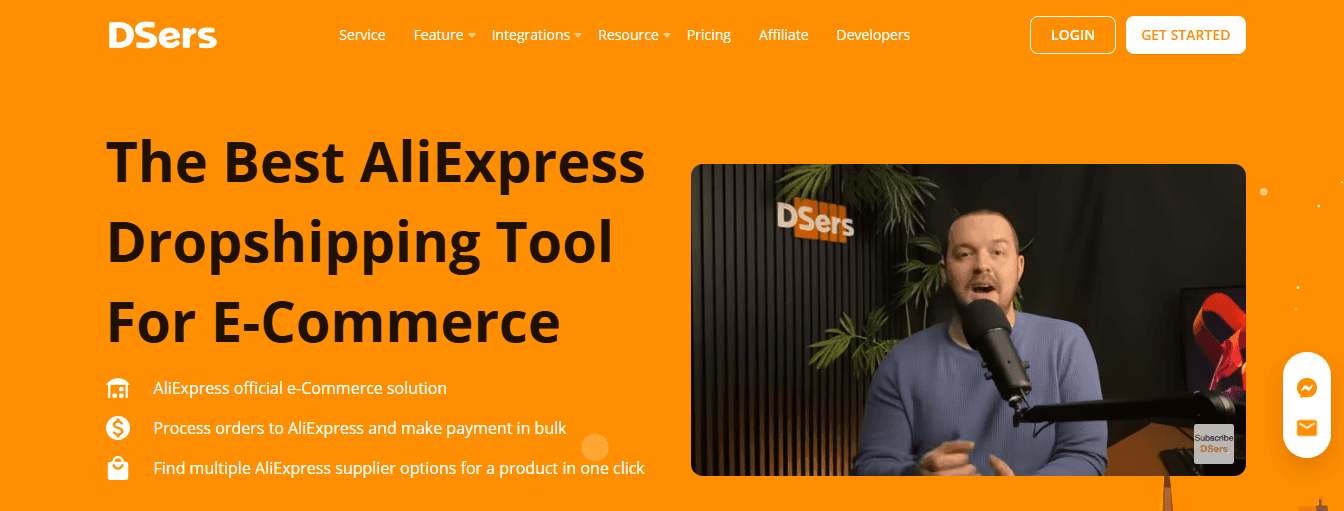
Focus on supplier integration and order fulfillment, automating purchasing, tracking, and pricing adjustments to maintain margins. Jared Goetz, Zendrop's CEO, generated $2 million in sales within 60 days through a Shopify store, demonstrating how proper fulfillment automation enables rapid scaling when product-market fit exists.

Provides AI-powered chatbots that answer common customer questions, capture leads, and support shoppers in real time. It creates the appearance of 24/7 availability without requiring constant human monitoring.

Centralizes customer service across email, chat, and social channels while using AI to automate responses and workflows for ecommerce stores. It handles the volume that comes with scaling, but requires initial setup to train the AI on your specific policies and product details.

Uses AI to personalize email and SMS marketing campaigns based on customer behavior, driving repeat purchases and recovering abandoned carts. It addresses retention after the first sale, which most beginners neglect in favor of acquisition.
Most successful dropshipping businesses use a combination of these tools across multiple categories. Product research, store building, marketing, fulfillment, and customer support each require different capabilities, which is why assembling a cohesive stack can be time-consuming for beginners. The traditional approach involves subscribing to separate platforms for each function, then manually connecting them through integrations or duplicate data entry. Each additional tool adds another monthly fee, another learning curve, and another potential failure point where data doesn't sync correctly, or workflows break down.
Understanding what each tool does and how they fit together is essential for choosing solutions that accelerate progress rather than adding unnecessary complexity. But knowing which tools to use doesn't solve the bigger problem most beginners face when they try to coordinate them all at once.

The tools meant to speed up your launch end up being the reason you never launch. Each platform you add creates another subscription to justify, another interface to master, and another integration point where things break silently. Before you've made a dollar, you're managing a software portfolio that would challenge an experienced operator.
Monthly fees accumulate faster than most beginners anticipate. A product research tool costs $30. Store builder adds $29. Email automation runs $20. Ad creative software charges $50. Customer service chatbot adds another $25. You're at $154 per month before your first visitor arrives, and that's a conservative estimate. According to Zymplify research, mid-sized businesses typically use 40 to 60 tools, with costs spiraling as teams try to cover every possible function. That financial pressure creates decision paralysis. Every tool choice feels permanent because switching later means migrating data, relearning workflows, and risking downtime during the transition. You delay launching because you're not certain you've assembled the right stack. The fear of committing to the wrong configuration keeps you researching when you should be testing products with real customers.
Tools promise to work together, but the reality is messier. Your store platform doesn't sync cleanly with your fulfillment software. Inventory updates lag behind sales by hours, causing you to sell products that are actually out of stock. Customer data lives in three different systems that don't communicate, forcing you to manually reconcile information when someone asks about their order. These failures rarely announce themselves. You discover the problem when a customer complains about receiving the wrong item, or when you realize your email automation has been sending abandoned cart reminders to people who already completed their purchase. By then, the damage to your reputation has already happened.
Even “beginner-friendly” tools assume baseline knowledge most newcomers lack. Setting up Facebook pixels requires understanding how tracking works across domains. Configuring shipping rules means grasping zone-based pricing and dimensional weight calculations. Connecting payment gateways involves SSL certificates, webhook endpoints, and API authentication. You thought you were learning how to run a dropshipping business. Instead, you're learning how to be a systems administrator for a software stack you didn't build and can't fully control. The skills you're developing have nothing to do with understanding customers, validating products, or creating compelling offers.
According to research from IT Brew, AI coding tools can actually make developers 19% longer to complete tasks when the tools introduce complexity that outweighs their automation benefits. The same dynamic appears in dropshipping. Tools meant to accelerate progress instead create new categories of work that didn't exist before. Many beginners report spending their first two weeks just getting everything configured. No products tested. No ads run. No customers reached. Just setting up and troubleshooting, wondering if they missed a critical step that will cause everything to break later.
Every tool category offers dozens of options, each with slightly different feature sets, pricing models, and user reviews that contradict each other. You spend hours comparing product research platforms, reading Reddit threads about which ones are worth the money, and watching YouTube reviews that all reach different conclusions. The comparison process never feels complete. There's always one more tool to evaluate, one more review to read, one more feature matrix to study. You tell yourself you're being thorough, but what you're actually doing is avoiding the moment when you have to commit and start building.
There's a point where researching tools stops being productive and becomes a way to avoid the scary part: putting your store in front of real people who might not care. As long as you're still setting up, you haven't failed yet. The possibility of success remains intact. Launch forces you to confront whether your product selection resonates, whether your messaging connects, and whether your pricing makes sense. Those answers are uncomfortable when they're negative. Tool research feels like progress without requiring you to face that discomfort.
People spend three months assembling the perfect tool stack, then abandon the entire project when they finally launch and get no sales in the first week. The tools weren't the problem. The delay was. By the time they went live, the trend they'd identified had already saturated. Competitors who launched faster with simpler setups had already captured the early demand. Platforms like AI Store Builder compress the entire setup phase into minutes by launching stores with products, suppliers, and infrastructure already configured. Instead of coordinating multiple subscriptions and learning separate systems, you start with a functional store and shift immediately to the work that actually determines success: finding customers and learning what they respond to.
AI Store Builder replaces the multi-platform assembly process with a single system that delivers a complete, operational store in minutes. Instead of subscribing to separate tools for research, design, supplier sourcing, and automation, you receive a Wix-based store preloaded with 20 trending products, connected suppliers, and functional infrastructure ready to accept orders. The platform handles what typically requires weeks of coordination across multiple services, compressing the path from concept to first sale into the time it takes to drink a coffee.
Traditional store launches demand sequential steps. Research products, find suppliers, build pages, configure payments, and set up email flows. Each phase waits for the previous one to finish. According to BizSpice, AI Store Builder completes this entire sequence in 86400000 milliseconds (roughly 24 hours of manual work compressed into under 10 minutes). That compression isn't just convenient. It's the difference between launching while a product trend still has momentum and arriving after the market saturated. When a product starts gaining traction on social platforms, you have a narrow window before competition floods in. Stores that launch in days capture early demand at higher margins. Stores that launch in weeks enter a pricing war with dozens of identical competitors. The platform eliminates the delay that kills most opportunities before they're tested.
Most beginners lose weeks scrolling through supplier catalogs, cross-referencing trending item lists, and second-guessing whether a product will actually sell. The paralysis comes from having infinite options but no validation mechanism beyond guessing. AI Store Builder preloads products with already demonstrated market traction, eliminating the blank-slate problem entirely. You start with items people are buying elsewhere, not items you hope might work. The supplier connections arrive configured, not as a task you need to complete:
The fulfillment infrastructure is in place before you make your first sale, addressing the operational risk that sinks stores even when their marketing works.
Technical setup overwhelms people who just want to test whether they can build a business. Configuring:
Requires knowledge that most beginners don't have and shouldn't need to acquire before validating their first product. The platform handles these structural elements automatically, letting users focus on the activities that actually determine success: finding customers and learning what messaging resonates. The included dropshipping course provides step-by-step guidance without requiring separate purchases or hunting through fragmented YouTube tutorials that contradict each other. Live support calls offer direct assistance when questions arise, compressing problem resolution from days of forum searching to minutes of conversation. Community access adds peer learning, which accelerates pattern recognition faster than isolated trial and error ever could.
Most tool stacks create a gap between when you start paying and when you can start learning. You're subscribed to five services, but can't test anything until all five work together correctly. AI Store Builder inverts this. You can begin running traffic and collecting customer behavior data immediately, since the store operates from the moment it's built. That shift from preparation mode to testing mode is where real business education happens.
The stores that succeed aren't the ones with the most sophisticated setups. They're the ones that test products quickly, learned what converts, and iterate based on actual customer behavior rather than assumptions. When your launch timeline compresses from weeks to minutes, you can test three product ideas in the time it would have taken to configure one traditional store. That velocity compounds. Each test teaches you something. Each iteration improves your instincts. Each failed product gets replaced faster, reducing the emotional and financial cost of being wrong.
The traditional approach asks you to become a systems integrator before you can become a merchant. AI Store Builder lets you be a merchant immediately, which is what you actually signed up to learn. But knowing the platform exists doesn't show you what happens when you actually use it to go from zero to launch.
If you want to skip months of setup and start testing products right away, AI Store Builder delivers a complete dropshipping store in under 10 minutes with no tool juggling required. You get a functional Wix store with 20 trending products already loaded, suppliers connected, and everything configured to accept orders immediately. The focus shifts from assembling infrastructure to making sales, which is what you actually signed up to learn. Get your store built today and focus on finding customers instead of configuring software. The fastest way to learn dropshipping is to start doing it, and that requires a store that works now, not one you'll finish building next month.
Get your free store in less than 10 minutes today
%20(1).avif)