March 5, 2026
Ramin Popal

You've set up your dropshipping business, chosen your products, and you're ready to launch. But then BigCartel's limitations start to show: limited customization options, limited product variants, and features that don't quite match what you need to scale. Understanding how to succeed in dropshipping means choosing an ecommerce platform that grows with your ambitions, not one that holds you back. This article walks you through the best BigCartel alternatives for starting an online store, comparing features, pricing, and tools that matter most for dropshipping success.
Finding the right platform shouldn't mean spending weeks testing different solutions or risking your launch timeline. AI Store Builder offers a straightforward path forward with its AI store builder that sets up your entire dropshipping store in minutes, complete with product listings, optimized descriptions, and a professional design tailored to your niche. Instead of wrestling with template restrictions or paying for multiple apps to add basic functionality, you get a complete storefront that's ready to accept orders while you focus on marketing and customer relationships.
AI Store Builder addresses this by delivering a complete Wix dropshipping store in under 10 minutes, preloaded with 20 trending products, supplier connections, and optimized listings, so entrepreneurs can shift time from setup to marketing and customer acquisition.

Most people search for a BigCartel alternative when they realize the platform that helped them launch is now holding them back. The shift happens quietly at first. You add a sixth product and discover you've hit the ceiling of the free plan. You want to automate inventory updates or integrate with a new supplier, and the tools simply aren't there. What felt simple suddenly feels restrictive.
BigCartel works beautifully for artists selling five handmade items or small creators testing a side project. The interface is clean. The learning curve is gentle. But ecommerce ambitions rarely stay small. When you decide to expand your catalog, test multiple product lines, or scale beyond hobby income, the platform's limitations quickly become apparent.
According to Ecommerce Gold's 2025 platform comparison, BigCartel's free plan limits users to just 5 products, creating an immediate decision point for anyone wanting to test more than a handful of items. That constraint matters more than it seems. Product testing is how you discover what sells. If you can only list five products, you're guessing instead of experimenting. You're choosing based on intuition rather than market feedback.
Customization options narrow as your needs expand. The templates are attractive but inflexible. Adding custom functionality often requires coding knowledge that most creators don't have. Automation tools for order processing, email sequences, or supplier integrations are minimal compared to platforms built for scaling. The platform wasn't designed for someone managing 50 SKUs or coordinating multiple suppliers across different niches.
The broader ecommerce opportunity has shifted expectations. Forrester forecasts that global retail ecommerce sales will reach $6.8 trillion by 2028, capturing 24% of all retail sales worldwide. That growth has transformed how people think about online stores. What used to be a creative side project now looks like a legitimate business path. Students, parents working from home, and people with 9-to-5 jobs see ecommerce as a source of accessible income, not just a hobby reserved for tech-savvy entrepreneurs.
That shift in perception creates pressure. If ecommerce is a real opportunity, then the tools you use need to support real growth. A platform that limits product listings or lacks supplier integrations starts to feel like a bottleneck rather than a foundation.
Switching platforms sounds like the solution, but it rarely solves the real challenge. Moving from BigCartel to Shopify or WooCommerce gives you more flexibility, but neither platform handles product research, supplier vetting, or store optimization. You still need to find profitable products, write compelling descriptions, set up payment processing, configure shipping rules, and design a storefront that converts visitors into buyers.
Most new store owners underestimate how much work it takes to get the first sale. Choosing a platform is one decision. Building a store that actually generates revenue requires dozens of smaller decisions, each with its own learning curve. Which niche should you target? Which suppliers are reliable? How do you price products competitively while maintaining margin? What kind of product photography converts best? How do you write descriptions that rank in search and persuade buyers?
AI Store Builder approaches this differently by handling the setup work that usually takes weeks. Instead of configuring a platform and then spending days researching products, sourcing suppliers, and building out your catalog, the system generates a complete store with pre-loaded products, optimized descriptions, and supplier connections already in place. You're not choosing between simplicity and scalability. You're starting with a functional store that's ready to accept orders while you focus on marketing and customer relationships.
The real reason people search for a BigCartel alternative isn't just about platform features. It's about realizing that launching a store involves much more than picking the right software. But most people don't discover that until they've already made the switch.

Once people begin searching for a BigCartel alternative, they often carry another assumption that quietly shapes their decisions.
The belief is simple
“If I just pick the right ecommerce platform, my store will succeed.”
This idea feels logical because most online advice centers on platform comparisons. Shopify versus WooCommerce. Wix versus Squarespace. The sheer volume of these debates creates the impression that the platform itself determines outcomes.
But the platform is only infrastructure. It handles checkout flows, payment processing, and product displays. What it doesn't do is determine whether anyone actually buys. That depends on entirely different factors: whether you've chosen products people want, whether your suppliers ship reliably, whether your product pages convert visitors, and whether you've built a marketing system that drives traffic in the first place.
The focus on platforms makes sense from a beginner's perspective. When you're starting out, the platform is the most visible decision to make. It's tangible. You can compare pricing tables, watch tutorial videos, and read feature lists. The choice feels concrete in a way that product research or marketing strategy doesn't.
YouTube is filled with videos debating which platform is “best for beginners” or “most affordable for side hustles.” Blog posts rank platforms by ease of use, design flexibility, and app ecosystems. Forum threads dissect whether Shopify's transaction fees outweigh BigCartel's product limits. For someone who's never launched a store, this creates a clear path: research platforms, pick the right one, and success will follow.
According to Shopify's 2024 Commerce Trends Report, stores that conduct systematic product research before launch achieve 3.2 times higher conversion rates than those that choose products based solely on personal preference. The gap isn't about platform features. It's about understanding what people are already searching for and willing to buy.
Successful stores typically start with strong product research:
Most critically, they build marketing systems that drive consistent traffic through social media, paid ads, content, or partnerships. Without these components, even Shopify's most advanced features won't generate revenue.
The platform provides the foundation, but the business model determines whether that foundation supports anything worth building.
Many store owners feel stuck after choosing a platform because they've solved only the first step. They've built the infrastructure, but they haven't built the business. The real work begins with questions the platform can't answer:
These questions multiply when you're staring at an empty dashboard. A more powerful platform gives you more options, which means more decisions to make and more ways to get it wrong. The flexibility you wanted becomes overwhelming when you don't know where to start. Should you add 10 products or 100? Should you focus on one niche or test multiple categories? Should you run Facebook ads immediately or build organic traffic first?
Traditional ecommerce platforms assume you'll figure this out yourself. They provide the tools, but not the strategy. You're responsible for product research, supplier vetting, store optimization, and marketing execution. For someone with ecommerce experience, that's manageable. For someone launching their first store while working a full-time job or managing family responsibilities, it's paralyzing.
Solutions like AI Store Builder handle the setup work that usually takes weeks. Instead of spending days researching products, sourcing suppliers, and writing descriptions, the system generates a complete store with pre-loaded products, optimized content, and supplier connections already configured. You're not choosing between platform features. You're starting with a functional store that's ready to accept orders while you focus on driving traffic and building customer relationships.
Focusing exclusively on platform choice costs time and momentum. Weeks spent comparing features and pricing plans are weeks not spent validating product ideas or testing marketing channels. The longer you delay launching, the more intimidating the process becomes. Analysis paralysis sets in. You convince yourself you need to find the perfect platform before you can start, when the truth is that imperfect action beats perfect planning every time.
The platform matters, but it matters less than most beginners think. What matters more is whether you've chosen products with real demand, whether your suppliers deliver consistently, whether your store communicates value clearly, and whether you've built systems to drive traffic. These are the variables that determine success. The platform is just the container that holds those variables.
Store owners discover this after they've already made the switch. They migrate from BigCartel to Shopify or WooCommerce, expecting the new platform to unlock growth. Instead, they face the same challenges with a more complex dashboard.
The product selection still isn't validated. The marketing strategy still doesn't exist. The supplier relationships are still unreliable. The platform changed, but the fundamental business problems remain unsolved.

Setting up an ecommerce store isn't a single afternoon project. It's a sequence of operational decisions that each carries consequences you won't see until later. Most people expect the hard part to be choosing products. The real friction shows up in the dozens of smaller tasks that sit between “I want to start a store” and “I'm ready to accept orders.”
Building a functional storefront means configuring payment gateways, organizing navigation logic, selecting themes that don't look like every other beginner store, and creating collection pages that make browsing intuitive. Product pages need images that show detail without slowing load times, pricing structures that account for supplier costs and platform fees, and descriptions that answer buyer questions before they're asked.
Supplier relationships require vetting for reliability, negotiating terms, and establishing backup options when your primary source runs out of stock. Shipping rules need to account for weight, destination, and carrier options. Checkout flows need testing across devices to catch the friction points that silently kill conversions.
According to Forbes' analysis of small-business website development, building a new website typically takes 4 to 14 weeks, depending on complexity and preparation. Ecommerce stores consistently fall toward the longer end because they involve product sourcing, payment integration, and logistics configuration that informational sites skip entirely.
That timeline assumes you already know which products to sell, which suppliers to use, and how to structure your catalog. Most beginners don't. They spend additional weeks researching niches, testing product ideas, and discovering that the winning products promoted in YouTube videos are already saturated. The research phase bleeds into the setup phase, which bleeds into the optimization phase, and suddenly, two months have passed without a single sale.
The extended timeline creates a specific problem:
Most ecommerce projects don't fail because of bad products or poor marketing. They fail because people run out of steam before the store goes live. The setup phase demands sustained effort with no immediate reward. You're building infrastructure, not generating income. Every task completed reveals three more tasks you didn't know existed. The finish line keeps moving.
The technical work feels endless because it is:
Each improvement is valid, but chasing perfection before launch guarantees you'll never launch. People working full-time jobs or managing family responsibilities face an additional constraint: limited capacity for decision-making. After eight hours of work and handling household logistics, sitting down to research dropshipping suppliers or write product descriptions feels overwhelming. The store becomes another obligation competing for attention rather than an exciting project you're building toward freedom.
The real expense isn't the platform subscription or the domain registration. It's the opportunity cost of spending weeks on setup tasks that could be automated or pre-configured. While you're learning how to optimize product titles for search visibility, someone else is already running ads and testing what converts. While you're vetting suppliers and negotiating terms, competitors are fulfilling orders and gathering customer feedback that informs their next product selection.
Speed matters in ecommerce because market conditions shift quickly. A product with strong demand today might be saturated in three months. Trends on TikTok or Instagram create brief windows where specific items see explosive interest before competition floods in and margins compress. If your setup process takes eight weeks, you're consistently arriving late to opportunities that require fast execution.
Platforms like AI Store Builder compress the setup timeline by handling the operational work that traditionally consumes weeks. Instead of spending days researching products, sourcing suppliers, writing descriptions, and configuring store settings, the system generates a complete store with pre-loaded inventory, optimized content, and supplier relationships already established.
You're not choosing between doing it yourself slowly or hiring expensive help. You're starting with a functional store that's ready to process orders while you focus on the work that actually drives revenue. Attracting visitors and converting them into customers.
The longer the setup takes, the more likely you are to skip the work that actually matters. Marketing strategy gets postponed because you're still fixing technical issues. Customer research gets ignored because you haven't launched yet. Testing different product angles or pricing strategies never happens because you're exhausted from just getting the store live.
Most beginners launch with a store that's technically functional but strategically weak. The products are listed, the checkout works, but there's no clear value proposition. The store doesn't communicate why someone should buy from you instead of Amazon or a competitor. The product selection isn't validated by demand data. The pricing doesn't account for acquisition costs. The store exists, but it's not built to convert.
The best BigCartel alternatives either simplify launching a store or provide the infrastructure needed to scale a business over time. Some platforms prioritize speed and automation, delivering complete storefronts in minutes. Others emphasize design flexibility or multi-channel selling capabilities. The right choice depends less on which platform has the most features and more on which one matches where you are in your ecommerce journey.
According to Ecommerce Gold's 2025 platform analysis, entrepreneurs evaluating alternatives typically prioritize one of three paths:
Each path solves a different problem. Understanding which problem you're actually trying to solve determines which platform makes sense.

AI Store Builder removes the operational work that typically consumes weeks before a store goes live. Instead of starting with an empty dashboard and manually configuring every element, the platform generates a complete Wix dropshipping store in under 10 minutes, pre-loaded with 20 trending products, supplier connections, and optimized product listings.
This approach addresses the friction point where most beginners stall. You're not choosing products from scratch, researching suppliers, or writing descriptions. The system handles those tasks using data about what's currently converting. The store arrives ready to accept orders while you focus on driving traffic and testing marketing channels.
Beyond the store itself, AI Store Builder includes a full dropshipping course valued at $3,000, access to live support calls, and a community of over 10,000 ecommerce entrepreneurs. These resources help new store owners learn how to market and grow their businesses after launch, bridging the gap between having a store and making it profitable.
For beginners who want to move directly into selling rather than spend weeks on setup, AI Store Builder offers one of the fastest paths from idea to a working business.

Wix appeals to entrepreneurs who want full control over their store's visual presentation. The platform's drag-and-drop builder allows users to create custom storefronts without writing code, making design decisions accessible to people with no technical background.
The platform also includes an AI-powered site creation tool that generates layout suggestions based on user preferences. This speeds initial setup while still allowing customization afterward. Wix provides built-in ecommerce features, including product management, email campaigns, and payment gateway integrations.

Shopify is built specifically for businesses that plan to scale. The platform supports unlimited products and offers access to thousands of third-party apps that extend functionality across email marketing, inventory management, dropshipping integrations, and customer analytics.
Shopify also integrates with print-on-demand services, fulfillment providers, and multi-channel selling platforms. This allows store owners to sell across social media, marketplaces, and websites simultaneously while managing everything from a single dashboard.

Sellfy focuses on creators who want to sell digital products, subscriptions, or creative content online. The platform emphasizes simplicity and speed, allowing users to set up a storefront quickly and begin selling digital downloads such as ebooks, music, courses, or design assets.
Sellfy supports subscription-based products and recurring revenue models, making it particularly useful for creators building membership communities or offering ongoing content. The platform includes built-in marketing tools for discount codes, email campaigns, and upselling products directly within the store.
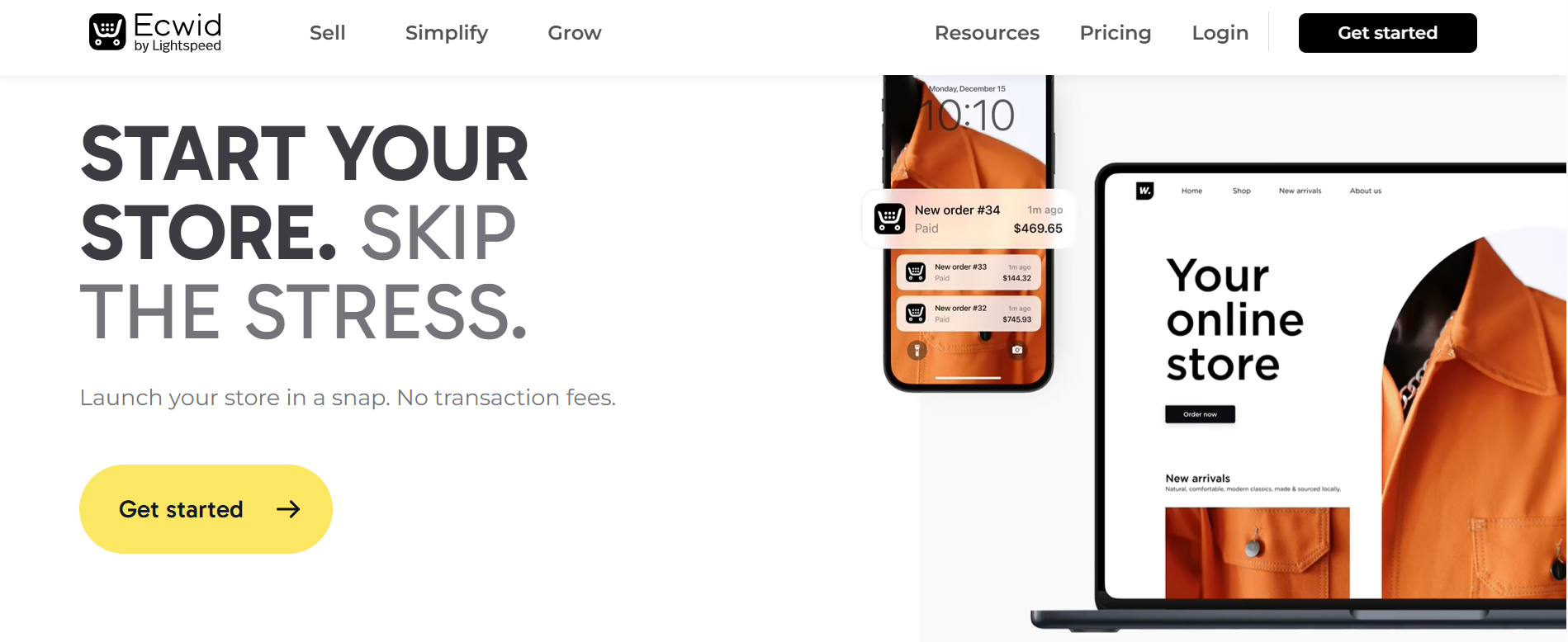
Ecwid integrates ecommerce functionality into existing websites rather than requiring merchants to build an entirely new store. This makes it particularly useful for businesses with an existing online presence that want to start selling products.
The platform supports multi-channel selling, allowing merchants to list products on social media platforms, online marketplaces, and websites simultaneously. Ecwid integrates with a wide range of payment gateways, making it flexible for global businesses.

Squarespace is known for its design-focused approach to website and ecommerce development. The platform offers professionally designed templates that are particularly appealing to creative entrepreneurs, photographers, artists, and boutique brands.
These templates allow store owners to build visually impressive storefronts without extensive design experience. Squarespace includes built-in analytics, inventory management tools, and integrated checkout systems. Store owners can manage products, track sales, and monitor visitor behavior from a single dashboard.

Gumroad focuses on enabling creators to sell digital products with minimal setup. Instead of building a full storefront, the platform allows creators to sell products directly through simple product pages that can be linked from social media profiles, websites, or newsletters.
The platform supports digital downloads, memberships, and recurring subscriptions, making it attractive for independent creators who monetize audiences through content. Gumroad's simplicity allows creators to launch quickly without managing complex store infrastructure.

Square Online is designed for businesses that operate both online and offline. The platform integrates closely with Square's point-of-sale system, allowing merchants to synchronize inventory between physical retail locations and their online store.
This makes it especially useful for local businesses, restaurants, and retailers that want a unified sales system. Square Online includes built-in tools for order management, shipping configuration, and product catalog management.
These platforms illustrate an important point: the best BigCartel alternative depends on your stage of ecommerce development and the problem you're actually trying to solve. Some platforms prioritize design and flexibility, while others focus on speed, automation, or scaling capabilities. The choice matters less than understanding which capability you need most right now.

Speed determines whether enthusiasm translates into action or evaporates into another abandoned project. For new entrepreneurs, the time between deciding to launch and actually opening for business creates a window where doubt, distraction, and competing priorities quietly kill momentum. When setup stretches across weeks, the initial excitement that made the idea feel possible begins to fade. What started as “I'm going to build this” becomes “I'll get back to it when I have more time,” which usually means never.
The gap matters because ecommerce success depends on iteration, not perfection. You can't discover what sells until you're actually selling. You can't learn which marketing messages resonate until you're testing them with real traffic. You can't identify supplier problems until you're processing orders. Every week spent configuring settings instead of gathering market feedback pushes back the moment when you start learning what actually works.
According to TriNet's 2025 research on small business competitiveness, 70% of small business owners say speed of decision-making is a key competitive advantage. That insight applies directly to store launches. Markets don't wait for you to finish optimizing. A product trending on TikTok today might be saturated in six weeks. A seasonal opportunity that could drive sales in November won't matter if your store goes live in December. Speed creates options. Delay eliminates them.
Most beginners underestimate how quickly their available time gets consumed by life. You start building a store with genuine intention, carving out evenings and weekends to make progress. Then work gets busy. A family member needs help. You get sick for a week. The project that felt urgent becomes something you'll finish next month. Except next month brings its own interruptions, and the store sits incomplete, slowly transforming from an exciting venture into a source of guilt.
Every time you think about the unfinished store, you're reminded that you started something and didn't follow through. That feeling makes it harder to restart. The longer the gap, the more intimidating the remaining work feels.
You forget where you left off. The product research you did three weeks ago feels outdated. The motivation that made the setup feel manageable has been replaced by fatigue and skepticism about whether this will actually work.
Successful ecommerce businesses emerge from experimentation, not planning. You test products to see which ones convert. You test pricing to find the sweet spot between margin and volume. You test ad copy, landing pages, and email sequences to discover what persuades your specific audience. None of that happens while you're still building the store.
The faster you launch, the faster you enter the testing phase, where real learning occurs. A store that goes live in three days allows you to run experiments this week. A store that takes six weeks to build delays those experiments by more than a month. That month represents dozens of potential tests you could have run, each one teaching you something about your market, your products, or your customers.
When setup is fast, you're not investing weeks of time before discovering whether the business model works. You can validate demand quickly, identify problems early, and pivot without having sunk enormous effort into something that isn't viable. The entrepreneur who launches in days and discovers their niche is oversaturated loses far less than the entrepreneur who spends two months building a store for that same saturated niche.
Platforms like AI Store Builder compress the launch timeline by delivering a complete store with pre-loaded products, supplier connections, and optimized content already configured. Instead of spending weeks researching products and writing descriptions, you start with a functional store that's ready to accept orders. The time you would have spent on setup shifts directly into marketing and customer acquisition, the activities that actually generate revenue.
Ecommerce markets move faster than traditional retail. A product can go from unknown to viral in days, driven by a single TikTok video or influencer mention. The entrepreneurs who capture that demand are the ones already set up to sell when the trend emerges. If your store takes six weeks to build, you're consistently arriving too late to the opportunity.
This doesn't mean chasing every viral product. It means having the infrastructure ready to act when you identify genuine demand. Speed creates optionality. You can test products quickly, scale what works, and abandon what doesn't without the sunk cost of weeks spent on manual setup. The ability to move fast turns market volatility from a threat into an advantage.

The traditional approach to launching an ecommerce store assumes you'll handle every operational detail yourself. Choose a platform, select a theme, research products, find suppliers, write descriptions, configure shipping rules, set up payment processing, and optimize for conversions. Each step requires decisions that delay launch and consume energy that could be spent testing what actually sells.
AI Store Builder collapses that timeline by delivering a complete store already configured for selling. Within 10 minutes, you have a functional Wix dropshipping storefront with products, suppliers, and content already in place. The system handles the operational work that typically stretches across weeks, allowing you to focus immediately on driving traffic and converting visitors.
Most platforms hand you an empty dashboard and expect you to construct everything from scratch. You select themes, arrange navigation menus, create collection pages, and configure dozens of settings before a single product appears. That process demands technical comfort and design intuition that many beginners don't possess.
AI Store Builder automatically generates the storefront structure. The layout is already organized. Navigation logic is configured. Collection pages are built. The store arrives ready to display products and process transactions without requiring you to make design decisions or understand technical configurations. You're not learning how to build a store. You're receiving one that's already functional.
Product research consumes more time than almost any other pre-launch task. Beginners scan marketplaces, watch competitor stores, analyze social media trends, and still end up guessing which items might convert. The uncertainty paralyzes decision-making because choosing wrong means wasted effort on products nobody wants.
AI Store Builder includes 20 trending products already loaded into your catalog. These aren't random selections. The system identifies items currently showing demand signals across ecommerce channels, giving you a starting inventory validated by market behavior rather than personal intuition. You can test these products immediately instead of spending weeks researching what to sell.
Finding reliable suppliers represents another major friction point. Poor supplier relationships lead to shipping delays, quality complaints, and customer service nightmares that damage your store's reputation before you've even built one. Vetting suppliers requires time, trial orders, and often painful learning experiences with vendors who disappear or deliver substandard products.
The platform connects your store with pre-vetted suppliers who handle fulfillment. The relationships are already established. Product quality has been verified. Shipping timelines are known. You're not gambling on untested vendors or discovering reliability issues after customers have already ordered. The fulfillment infrastructure is in place before your first sale.
Beyond adding products to your catalog, each listing needs to be optimized. Descriptions must communicate value while incorporating search-friendly language. Images need proper formatting. Pricing requires calculation that accounts for supplier costs, platform fees, and desired margins. Most beginners either skip this optimization or spend days perfecting listings that could have been tested immediately.
AI Store Builder delivers product pages already structured for conversion. Descriptions are written. Images are formatted. Pricing is configured. The listings function as complete product pages ready to accept orders. You're not staring at blank fields, wondering what to write or how to position each item. The content exists, allowing you to launch and iterate based on actual customer behavior rather than theoretical best practices.
Launching represents only the beginning of building an ecommerce business. Most store owners struggle not because their store is poorly built, but because they don't understand how to drive traffic, optimize conversion rates, or scale profitably. Traditional platforms provide infrastructure but assume you'll figure out business strategy independently.
AI Store Builder includes a complete dropshipping course covering marketing, customer acquisition, and scaling strategies. The curriculum addresses the knowledge gaps that prevent new store owners from generating consistent revenue. Users also access live support calls and a community of over 10,000 ecommerce entrepreneurs, creating an environment where questions get answered and strategies get shared. The platform doesn't just build your store. It provides the education needed to operate it successfully.
The fundamental difference between AI Store Builder and traditional ecommerce platforms is where your time gets spent. Traditional platforms require you to invest weeks building infrastructure before you can begin learning what works in your market. AI Store Builder delivers that infrastructure immediately, freeing up your focus for revenue-generating activities.
You're not configuring settings or researching suppliers. You're testing marketing channels, analyzing which products convert, and refining your customer acquisition strategy. The operational friction that delays most launches disappears, replaced by the iterative testing that actually builds profitable businesses.
If you're searching for a BigCartel alternative because you want to launch a store faster, AI Store Builder can create a complete Wix dropshipping store for you in under 10 minutes. Your store comes preloaded with 20 trending products, trusted suppliers, and a full dropshipping course so you can start learning and selling immediately.
Skip the headaches of store setup, product research, and supplier hunting, and get your store built today.
Get your free store in less than 10 minutes today
%20(1).avif)