March 3, 2026
Ramin Popal

You've built a product line, found reliable suppliers, and you're ready to launch your dropshipping store. But here's where many entrepreneurs stumble: choosing the right ecommerce platform to showcase their products and process orders efficiently. While Squarespace offers beautiful templates, it wasn't designed with dropshipping in mind, and many sellers quickly discover its limitations when trying to scale their online business. If you're wondering how to succeed in dropshipping, selecting the best website builder for your specific needs is one of the most consequential decisions you'll make, and this article will walk you through the top Squarespace alternatives that actually support the unique demands of selling online without holding inventory.
What if you could skip the technical setup entirely and have an online store built specifically for your dropshipping business? AI Store Builder creates fully functional ecommerce stores tailored to your niche, handling everything from product imports to payment integration, so you can focus on marketing and customer relationships instead of wrestling with platform limitations. This approach eliminates the guesswork of traditional website builders like Wix, Shopify, or BigCommerce, giving you a ready-to-launch store optimized for conversions from day one.
AI Store Builder addresses this by delivering pre-configured Wix stores with trending products, verified suppliers, payment processing, and conversion-optimized listings already integrated, compressing setup from weeks to minutes so sellers can focus immediately on marketing rather than infrastructure assembly.

Squarespace handles visual presentation beautifully, but selling physical products demands operational efficiency that design alone can't deliver. The platform was built for content creators, with ecommerce layered on top, meaning the workflows that matter most for product sellers often require workarounds, third-party tools, or manual processes that slow momentum.
Squarespace's strength is its weakness here. Templates look polished, but they're optimized for storytelling, not conversion.
Product pages that drive sales need specific elements:
Adjusting these elements in Squarespace often means fighting against templates designed for visual impact rather than purchase behavior.
Beginners spend hours tweaking layouts to make them feel right, only to realize that "looking good" and "selling well" require different architectures. The platform doesn't guide you toward conversion optimization because that wasn't its original purpose.
Running a dropshipping business means connecting suppliers, syncing inventory in real time, automating order fulfillment, and managing product updates across potentially hundreds of SKUs. Squarespace lacks native tools for these workflows. According to Store Leads, only 386,779 stores actively use Squarespace for ecommerce, a fraction of its total user base, suggesting most users recognize the platform isn't built for product-heavy retail operations.
You'll need third-party apps for supplier integration, but Squarespace's app ecosystem is limited compared to commerce-first platforms. Finding reliable tools that work seamlessly together becomes a research project in itself. Each integration adds cost, potential bugs, and another login to manage.
Creating a Squarespace site is fast. Creating a Squarespace store that actually functions takes considerably longer. You're configuring payment gateways, setting up shipping zones and rates, creating tax rules, writing return policies, organizing product collections, and building navigation that makes sense for shoppers who want to browse by category, price, or feature.
None of this is impossible, but it requires decisions that beginners often aren't prepared to make.
Squarespace gives you the tools but not the guidance, leaving new sellers to figure out best practices through trial and error.
Most dropshipping businesses succeed or fail based on how quickly they can test products, launch marketing campaigns, and iterate based on customer response. Every day spent building infrastructure is a day not spent validating demand or acquiring customers.
Traditional website builders like Squarespace assume you have time to craft your presence carefully. But in ecommerce, especially dropshipping, speed to market often matters more than pixel-perfect design. The store launching this week with a decent design beats the store launching next month with a perfect design, because only live stores generate data on what customers actually want.
Platforms designed specifically for dropshipping understand this. Tools like AI Store Builder skip the setup phase entirely, delivering pre-configured stores with products, suppliers, and payment processing already integrated. You're no longer choosing between speed and functionality. You're starting with both, then customizing from a foundation that already works.
Squarespace markets itself as simple, and for certain use cases, it is. But simplicity in design doesn't equal simplicity in operation. The platform hides complexity rather than eliminating it, which means beginners encounter problems they didn't know existed.
These questions have answers, but finding them requires understanding how Squarespace structures data, handles responsive design, and processes transactions. You're learning the platform's logic rather than how to run your business.
The misconception is that any modern website builder can handle ecommerce equally well because they all have shopping cart features. But the difference between displaying products and operating a profitable store is enormous. One requires design skills. The other requires systems thinking, customer psychology, and operational efficiency.
.jpeg)
For first-time sellers, the biggest risk isn't choosing the wrong platform in theory; it's choosing the wrong platform in practice. It's choosing one that slows down execution in practice. Early success in ecommerce comes from launching quickly, testing real demand, and improving based on data, not from building the most polished website. A platform that delays launch also delays learning whether customers will actually buy.
Beginner-friendly platforms, therefore, prioritize speed, clarity, and operational simplicity over advanced customization.
New sellers need a functioning store live as quickly as possible. Every additional week spent building is a week without customer feedback, traffic data, or revenue. Early traction comes from testing products and messaging, not from endlessly refining aesthetics.
The anxiety around setup is real. Beginners want something that works without all the bells and whistles, especially when operating on tight budgets. They're motivated to ship and launch simple business sites quickly without constant maintenance overhead. The longer you spend configuring payment gateways, writing product descriptions, and tweaking layouts, the longer you're operating on assumptions instead of evidence.
According to Google, 53% of shoppers say site speed impacts their purchase decision. But speed matters before launch, too. The store that goes live this week with decent functionality beats the store that launches next month with perfect design, because only live stores generate data about what customers actually want.
For dropshipping or product-based businesses, sourcing is central to success. A platform should easily connect to suppliers or support product imports without complex manual processes. When sourcing is cumbersome, inventory management and fulfillment become error-prone, increasing the risk of delays and dissatisfied customers.
Most beginners aren't prepared for the operational realities of real-time inventory syncing, automating order fulfillment, and managing product updates across potentially hundreds of SKUs. They assume the hard part is design. The hard part is actually logistics, and platforms that don't address this create friction that stalls progress.
Platforms designed specifically for ecommerce understand this. Tools like AI Store Builder skip the sourcing research phase entirely, delivering pre-configured stores with trending products and verified suppliers already integrated. You're not spending weeks vetting suppliers or manually importing product data. You're starting with a foundation that already works, then customizing from there.
Beginners benefit from layouts designed to guide visitors toward purchase. Clear product pages, trust signals, simple navigation, and streamlined checkout matter far more than artistic design elements. A visually stunning site that confuses shoppers will underperform a simpler store built for conversion.
The challenge is that most website builders optimize for visual impact rather than purchase behavior. You can spend hours tweaking layouts to make them feel right, only to realize that looking good and selling well require different architectures. According to Baymard Institute, 69% of online shoppers abandon their carts. That's not a design problem. That's a friction problem.
Handling orders should be straightforward. Tracking purchases, updating statuses, and communicating with customers must not require multiple disconnected tools. Operational clarity reduces mistakes and frees time for marketing and growth activities.
The frustration comes when you're juggling separate dashboards for inventory, fulfillment, customer emails, and payment processing. Each login is another point of failure. Each manual update is another opportunity for error. Beginners want platforms that help them generate leads and close sales, rather than spend time managing backend systems.
Most beginners are not developers. Platforms that require coding, complex integrations, or deep configuration can create friction that stalls progress. Intuitive interfaces and automated processes allow entrepreneurs to focus on business decisions rather than technical troubleshooting.
The desire to avoid headaches and complications reflects real anxiety about technical challenges. Beginners emphasize their status as beginners because they lack confidence and need hand-holding. They're drawn to platforms that automate boring setup tasks and help them get online faster without requiring technical skills.
New stores operate with uncertain revenue. High upfront expenses increase pressure and reduce runway for testing ads or refining offers. Predictable, manageable costs make experimentation safer and more sustainable.
There's tension between wanting low cost and wanting ease of use. Beginners may focus too heavily on finding the absolute cheapest option without considering the time cost of technical complexity. A free plan that requires 40 hours of setup isn't actually free. Your time is valuable, especially when it could be spent on marketing or customer acquisition.

Migrating to a new platform feels like progress, but it often introduces more friction than the original problem. The issue isn't that transitions are technically difficult. It's that they consume time, budget, and focus during the exact period when you should be testing products and acquiring customers.
According to Gartner research, analysis of 200+ technology systems reveals that migrations routinely exceed budgets and timelines because teams underestimate hidden dependencies and integration complexity.
Sophisticated ecommerce systems promise powerful capabilities, but they're designed for companies with dedicated developers, designers, and operations teams. For solo founders or small teams, that power becomes a liability. Adding a product shouldn't require navigating three separate menus. Editing a page shouldn't demand understanding custom code blocks. Configuring shipping shouldn't feel like learning a new language.
The cognitive load matters more than people realize. You're not just managing a store. You're managing the platform's logic, terminology, workflows, and limitations. Every routine task becomes a research project. Instead of accelerating growth, complexity traps you in administrative work that generates zero revenue.
Base subscription prices rarely reflect true operating costs. Most essential functions, advanced analytics, email automation, subscription management, and enhanced shipping tools require paid add-ons. What starts as a $30 monthly plan quickly becomes $150 once you've added the capabilities needed to compete.
These incremental costs erode your advertising budget. Every dollar spent on platform infrastructure is a dollar not spent testing products or acquiring customers. For early-stage stores, that trade-off directly impacts survival. You're paying for the privilege of working harder, not smarter.
Every platform has its own interface, workflows, and terminology. Learning a new system consumes weeks that could otherwise be spent attracting customers or improving offers. You're memorizing where buttons live instead of studying what makes people buy.
Productivity doesn't just dip temporarily. It collapses. Tasks that should take minutes stretch into hours because you're constantly searching for features or troubleshooting configurations. For solo entrepreneurs, that productivity loss directly delays the only activities that generate revenue: marketing and selling.
Moving an existing site involves more than copying content. Product data, images, customer information, URLs, payment settings, and domain configurations must all transfer correctly. Miss one step, and you're dealing with broken links, missing products, or checkout failures that cost sales.
According to Search Engine Journal, poorly managed site migrations cause significant temporary drops in search traffic, sometimes lasting months. For stores relying on organic visibility, that drop translates directly into lost revenue. You're paying for a better platform while earning less because the transition itself damaged your discoverability.
Some platforms rely on multiple third-party services for essential functions. When these tools fail to integrate smoothly, you end up managing separate dashboards, duplicating data entry, and running manual processes that should be automated.
Operational fragmentation increases error rates. Inventory mismatches occur when one system is updated, but another isn't. Orders are delayed because fulfillment notifications don't trigger correctly. Troubleshooting becomes nearly impossible because problems originate in external systems you don't control. You're not running a store. You're managing a collection of disconnected tools that barely cooperate.
Platforms like AI Store Builder eliminate this fragmentation entirely by delivering pre-integrated stores with products, suppliers, payment processing, and fulfillment already connected. You're not assembling pieces. You're starting with a system that already functions as a unified whole.
Switching platforms should be treated as a strategic business decision, not a technical fix. The goal isn't finding the most feature-rich system. It's finding the one that minimizes friction, keeps costs predictable, and supports your current stage of growth without demanding expertise you don't have yet.

AI Store Builder creates a complete Wix store in under 10 minutes, handling the entire setup process that typically takes weeks. The service includes 20 pre-selected trending products with established market demand, connections to trusted suppliers eliminating supplier search and vetting, and a comprehensive dropshipping course covering business fundamentals that other programs charge thousands for separately. Live support calls provide direct assistance in navigating challenges, whilst community access connects you with other store owners for shared learning and problem-solving.
The done-for-you approach removes common barriers preventing people from starting:
You receive a functioning store ready to customize and launch rather than starting from blank templates.
This suits complete beginners overwhelmed by the traditional store-building process, busy professionals wanting to test eCommerce without investing hundreds of hours learning platforms, and anyone who has attempted building stores before but got stuck on product selection or supplier relationships.

Wix provides intuitive visual editing, allowing precise control over store appearance without coding. The platform includes built-in features like email marketing, customer management, analytics, and social media integration. Wix ADI (Artificial Design Intelligence) can generate site designs automatically based on your preferences.
The platform handles unlimited products, multiple payment methods, automated tax calculations, and shipping management. Wix suits creative businesses prioritizing unique design, those looking for a consolidated website and store management, and beginners who prefer visual editing over code or complex settings.

Shopify provides a comprehensive eCommerce infrastructure including customizable themes, integrated payment processing, inventory management, order fulfillment tools, and marketing features. The platform's App Store offers thousands of extensions, ranging from email marketing to advanced analytics to dropshipping automation. Shopify supports selling across channels (your website, social media platforms, marketplaces, and physical retail locations) from a unified backend.
The platform scales from single-product stores to enterprises processing millions in annual revenue. Built-in features include abandoned cart recovery, discount codes, gift cards, and customer accounts. Shopify suits businesses planning significant growth, those wanting extensive customization through apps, and sellers managing inventory across multiple sales channels.

WooCommerce operates as a WordPress plugin, transforming WordPress sites into functional online stores. Being open-source means no platform fees. You pay only for hosting, domain, and any premium extensions you choose. Complete access to code allows unlimited customization for those with technical skills or developer access.
Thousands of free and paid extensions add functionality from subscription billing to bookings to memberships. WooCommerce suits businesses already using WordPress for content marketing, those with development resources wanting maximum flexibility, and sellers requiring specific functionality not available on closed platforms.
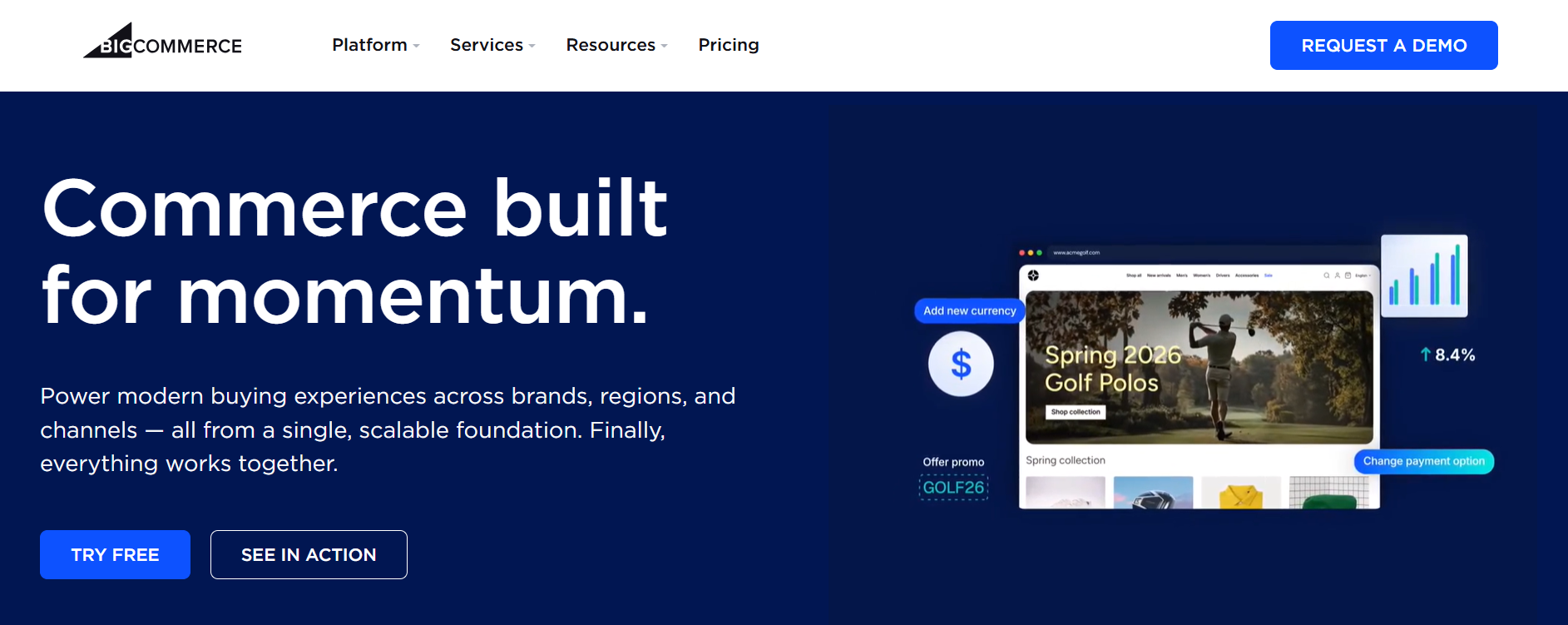
BigCommerce provides enterprise-grade functionality, including unlimited products, bandwidth, and file storage, regardless of plan level. Built-in features like advanced SEO tools, multi-currency support, customer segmentation, and detailed analytics reduce reliance on paid apps. The platform excels in B2B with quote systems, custom pricing per customer, and bulk-ordering capabilities.
Integration with major marketplaces (Amazon, eBay, Walmart) and social platforms allows multi-channel selling from one inventory source. BigCommerce suits growing businesses anticipating high transaction volumes, B2B sellers needing wholesale functionality, and companies wanting powerful built-in features without extensive app dependencies.
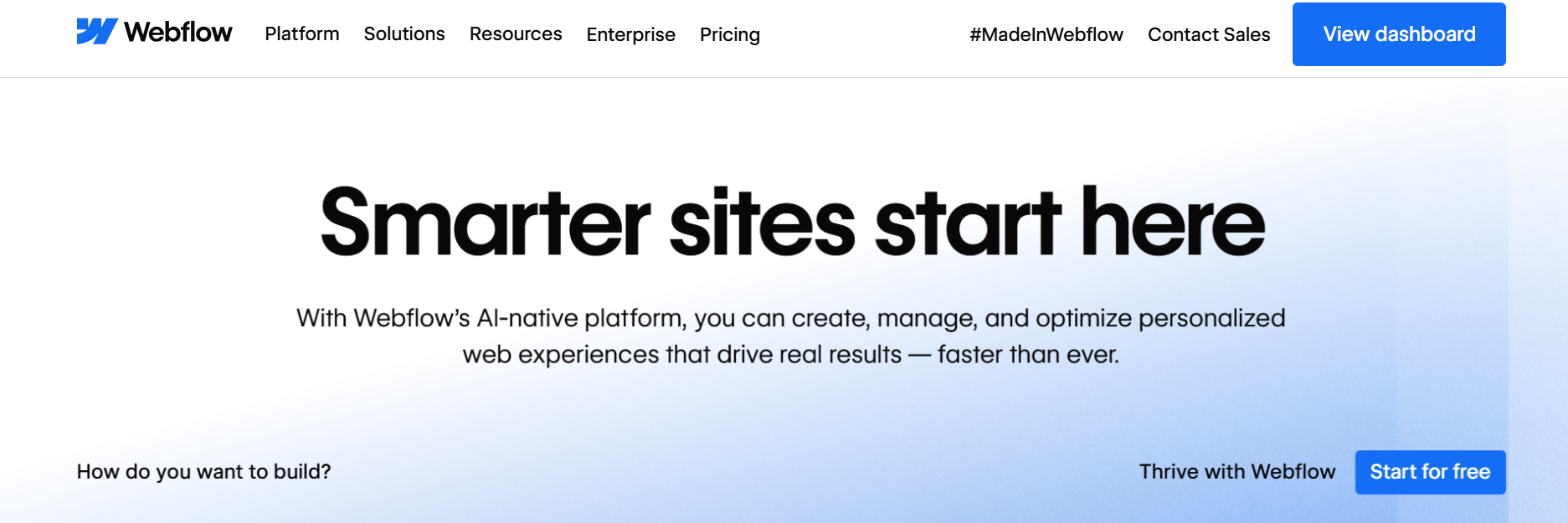
Webflow combines visual design tools with powerful CMS capabilities and eCommerce functionality. Designers have granular control over every visual element, whilst Webflow generates clean, production-ready code. The CMS allows complex content structures beyond typical eCommerce templates.
ECommerce features include product variants, inventory tracking, order management, and payment processing. Webflow suits design agencies building client stores, brands requiring completely custom aesthetics, and those comfortable with design-oriented workflows rather than traditional eCommerce platforms.

Big Cartel specializes in simple stores for independent creators selling handmade goods, art, apparel, or small product lines. The platform offers a straightforward setup without overwhelming features, making it accessible for non-technical users. Free plans support up to 5 products; paid plans scale to up to 500 products.
Basic features include customizable themes, inventory tracking, order management, and discount codes. Big Cartel suits artists and crafters wanting simple selling without learning complex platforms, those testing markets with small inventories, and creators prioritizing ease over advanced functionality.
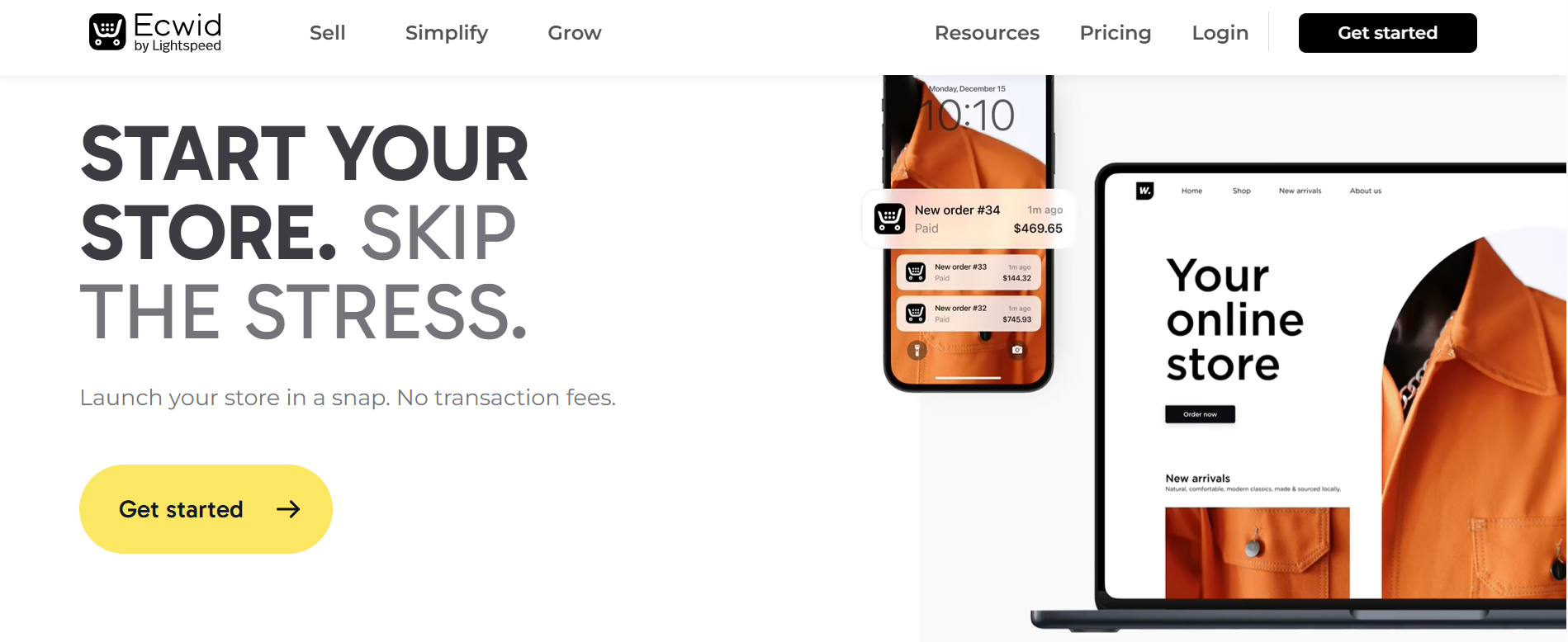
Ecwid functions as an embeddable store you can add to existing WordPress sites, Wix, Weebly, or virtually any website. It also creates standalone storefronts if needed. The platform synchronizes inventory and orders across all selling channels (your website, Facebook, Instagram, Amazon, eBay) from one control panel.
Features include mobile apps for iOS and Android, allowing store management anywhere, offline selling through POS capabilities, and automated tax calculations. Ecwid suits businesses with established websites wanting to add selling functionality, multi-channel sellers managing inventory across platforms, and those wanting mobile store management.

PrestaShop provides free, self-hosted eCommerce software, particularly strong in international commerce features. Built-in support for multiple languages, currencies, and localized payment methods facilitates global selling. Being open-source allows complete customization with access to the source code.
Thousands of modules and themes available through the marketplace add functionality and design options. PrestaShop suits international businesses selling across countries, those with technical resources to manage self-hosted software, and sellers requiring specific functionality through custom development.

Shift4Shop offers genuinely free eCommerce software (not a trial or limited free tier) when using their payment processing. The platform includes unlimited products, bandwidth, and features regardless of sales volume. Built-in features cover SEO, marketing, CRM, inventory management, and order processing.
The free model works because Shift4Shop earns from payment processing rather than platform fees. Shift4Shop suits cost-conscious sellers willing to use specific payment processing, startups minimizing upfront investment, and US-based businesses qualifying for the free offering.

Sellfy specializes in digital goods, including ebooks, courses, software, music, art, and videos. The platform handles file hosting, secure delivery, and license key generation. Built-in marketing features include email marketing, discount codes, upsells, and cart abandonment campaigns.
Integration with print-on-demand services allows selling physical products without inventory. Sellfy suits content creators monetizing digital products, educators selling courses, artists selling downloadable work, and creators wanting simple digital sales without physical inventory management.
Volusion provides traditional hosted eCommerce with comprehensive features, including responsive themes, product management, payment processing, shipping integration, and built-in marketing tools. The platform includes CRM functionality, newsletter management, and detailed reporting.
Volusion has served eCommerce since 1999, providing stability and experience supporting online sellers. The platform suits established businesses migrating from outdated systems, those wanting straightforward eCommerce without the learning curves of newer platforms, and companies appreciating mature, proven technology.
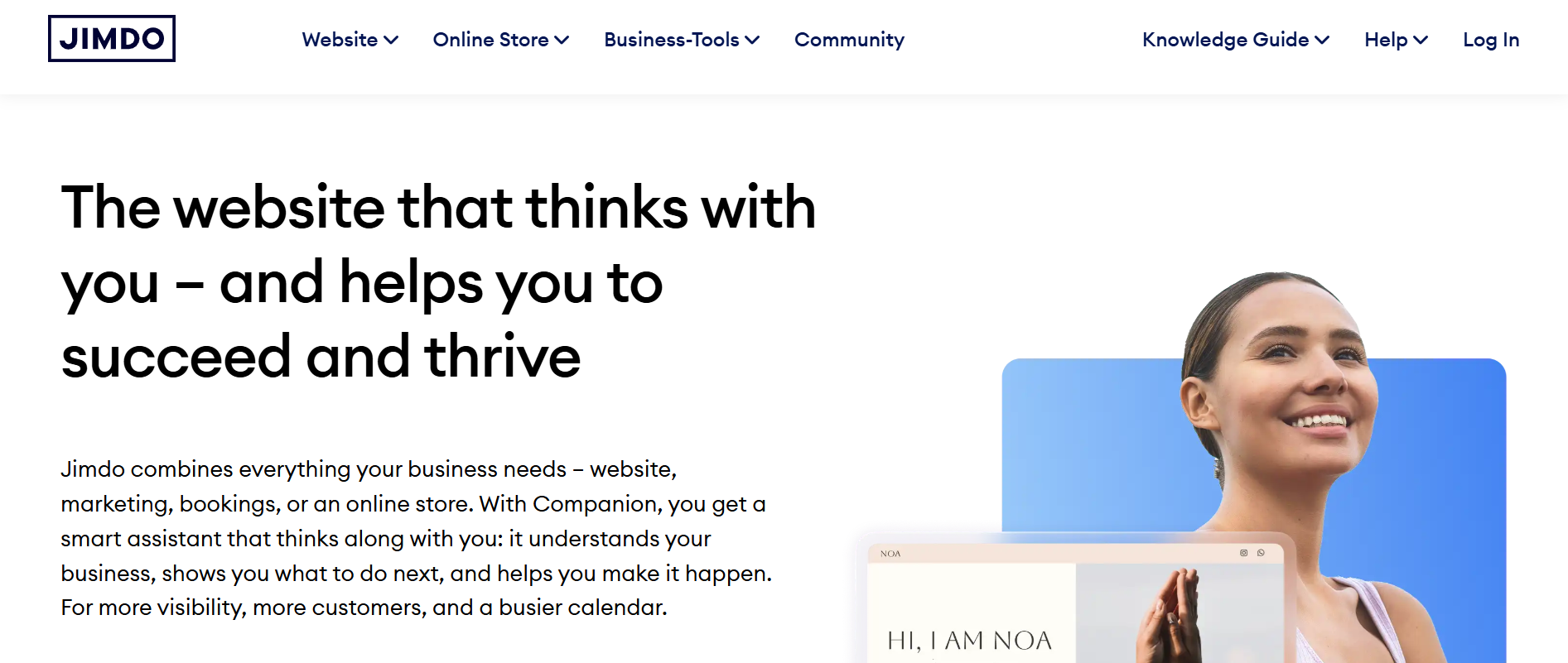
Jimdo emphasizes simplicity above all else, offering AI-assisted website building that creates stores through conversational questions. The platform handles basics (product listings, payment processing, shipping) without complexity. Mobile apps allow store management from smartphones.
Limited customization keeps things simple but may feel restrictive for growing businesses. Jimdo suits complete beginners intimidated by traditional platforms, very small operations selling a handful of products, and those prioritizing simplicity over scalability and advanced features.
Zyro provides affordable eCommerce with a modern website builder, including AI tools for content generation, logo creation, and image upscaling. The platform offers clean templates, drag-and-drop editing, and standard eCommerce features like product management, payment processing, and inventory tracking.
The pricing sits below major competitors while providing comparable core functionality. Zyro suits budget-focused startups, side hustles testing viability without major investment, and sellers wanting contemporary design aesthetics at lower price points.

Square Online connects seamlessly with Square's payment and POS ecosystem, synchronizing inventory and sales across online stores, physical retail, and mobile selling. Setup is particularly simple for existing Square users. Your products, customers, and sales data already exist in Square, making the online store launch straightforward.
The platform includes a free tier for basic selling, with paid tiers that add advanced features. Square Online suits brick-and-mortar businesses adding online sales, mobile sellers at markets or events wanting an online presence, and anyone already invested in Square's ecosystem.
Most beginners spend weeks comparing platforms when the real decision is simpler: do you want to build infrastructure or start selling? According to EXPERTE.com, after reviewing 15 website builders, platforms that reduce setup friction consistently outperform those that offer maximum customization for early-stage sellers. The stores launching this month with decent functionality beat the stores launching next quarter with perfect design, because only live stores generate data on what customers actually want.
Traditional website builders assume you have time to craft your presence carefully. But in eCommerce, especially dropshipping, speed to market often matters more than pixel-perfect design. Platforms designed specifically for dropshipping understand this.
Tools like AI Store Builder skip the setup phase entirely, delivering pre-configured stores with products, suppliers, and payment processing already integrated. You're no longer choosing between speed and functionality. You're starting with both, then customizing from a foundation that already works.

Software selection solves only the access problem. The real bottleneck surfaces when you try to coordinate everything that must happen simultaneously for a store to generate its first sale. You're not just building pages. You're assembling a system where product selection, supplier relationships, persuasive copy, payment processing, shipping logic, and customer trust signals must all function together before you can test whether anyone actually wants what you're selling.
The execution gap between having a platform and having a functioning business is where most projects stall. Research from CB Insights on startup failure found that 38% of failed startups ran out of cash or failed to raise new capital, often because they took too long to generate meaningful revenue. For ecommerce beginners, extended build phases with no sales produce the same outcome on a smaller scale: budgets shrink while uncertainty grows.
Product pages need pricing hierarchies that make the value obvious without scrolling. Trust signals belong exactly where doubt surfaces, not scattered randomly across layouts. Shipping information must appear before checkout, not after someone has already invested mental energy in selecting items. These elements require strategic positioning based on purchase behavior rather than aesthetic preference.
Each test consumes time and advertising budget. Failed attempts are discouraging, especially when there's no clear signal whether the issue is the product, the marketing, or the store itself. You're spending money to learn what doesn't work, which is valuable but financially draining when you're operating on limited resources.
The challenge compounds because product selection affects everything else. Choose poorly, and your best copywriting won't save you. Choose well, and even mediocre execution can generate sales. But you won't know which situation you're in until after you've built the rest of the store and started driving traffic.
All of this happens while you're trying to acquire new customers, dividing your attention between growth and damage control.
The vetting process takes time because you're assessing partners you've never worked with before. You're reading reviews, ordering samples, testing communication speed, and comparing terms. Each decision carries risk because you lack the experience to know what red flags matter most.
Creating persuasive descriptions requires understanding the target audience, their objections, and their use cases. For new sellers without copywriting experience, this step is time-consuming and uncertain. You're guessing at what resonates, rewriting multiple times, and still unsure whether the final version will actually persuade anyone to buy.
The difficulty is that good copy sounds simple when you read it. That simplicity hides the strategic thinking behind word choice, structure, and emphasis. You're not just describing a product. You're addressing unspoken doubts, positioning value against alternatives, and making the purchase feel obvious.
Because these settings vary by region and business model, beginners rely on trial and error to get them right. You're navigating dropdown menus with terminology you don't fully understand, making choices that seem minor but can break the checkout experience. A single incorrect setting can cost you sales without you even knowing why customers abandoned their carts.
The stakes feel high because mistakes here are invisible until someone tries to buy. You can't test every possible scenario before launch, so you're hoping your configurations work correctly when real customers arrive.
Perhaps the biggest challenge is that store building happens alongside learning how to attract customers. Advertising platforms, social media strategy, analytics, and conversion optimization all have steep learning curves.
Trying to master these skills while still constructing the store divides attention and slows progress in both areas. You're watching Facebook ads tutorials while also trying to figure out why your product images aren't displaying correctly. You're learning email marketing best practices while troubleshooting payment gateway errors. Nothing gets your full focus because everything demands attention simultaneously.
The familiar approach is to handle each task sequentially: build the store first, then learn marketing. As complexity grows, that separation breaks down. You realize your store design affects conversion rates, which you can't measure without traffic, which you can't generate without marketing knowledge, which you don't have time to develop while still building. The dependencies cascade, and progress stalls.
Platforms like AI Store Builder compress this timeline by delivering pre-configured stores with products, suppliers, payment processing, and training already integrated. You're not coordinating separate tasks. You're starting with a system that already functions, then learning marketing with a live store that can immediately test what you're learning.

The platform automatically generates a fully operational Wix dropshipping store, eliminating the construction phase that typically takes weeks. You receive a finished business foundation with products, suppliers, payment processing, and optimized listings already configured. This shifts your focus immediately to marketing and customer acquisition rather than technical assembly.
Twenty trending products arrive ready to sell, eliminating the research paralysis that stalls most beginners. These aren't random items pulled from supplier catalogs. They're selected based on current market demand signals, meaning you start with inventory that has demonstrated purchase intent rather than guessing what might work.
This matters because product validation normally requires analyzing competitor sales data, studying social media engagement patterns, and testing small batches to gauge response. That process can stretch over weeks as you burn through your advertising budget, learning what doesn't convert. Starting with pre-validated products compresses that timeline to zero. You're testing messaging and audience targeting, not whether the product itself has market fit.
Trusted suppliers connect to your store from day one and automatically handle fulfillment workflows. No outreach emails, no sample orders to verify quality, no negotiations over shipping times or return policies. The relationships already exist, which removes one of the most time-consuming and uncertain aspects of launching.
Supplier vetting normally involves ordering samples, testing communication responsiveness, comparing pricing across multiple vendors, and hoping your assessment proves accurate once real orders start flowing. Each mistake here creates customer service problems that damage your reputation before you've built any goodwill.
According to WP Meteor configuration, even minor delays can cascade through systems, with configuration issues causing 86400000 milliseconds of delay in certain scenarios, underscoring how technical friction compounds operational problems.
Product pages arrive with persuasive copy, structured benefits, and strategically positioned trust elements. This isn't generic supplier text copied into templates. The listings are built around conversion psychology, placing information where buying decisions actually happen rather than where it looks aesthetically pleasing.
Beginners often launch with product pages that describe features but fail to address objections or communicate value clearly. The difference between a page that converts at 1% and one that converts at 3% determines whether your advertising spend generates profit or loss. Without experience, you can't identify which elements drive purchases versus which ones just occupy space. Pre-optimized listings give you a functional baseline to test against rather than starting from guesswork.
No coding knowledge required. No complex configuration menus. No dropdown settings with terminology you don't understand. The store functions immediately because the technical decisions have already been made correctly. You're not troubleshooting payment gateway errors or figuring out why shipping calculations display incorrectly at checkout.
The familiar approach is to learn the platform first, then build your store. As complexity grows, that separation breaks down. You realize design choices affect conversion rates, which you can't measure without traffic, which you can't generate without marketing knowledge, which you don't have time to develop while still troubleshooting technical issues.
Platforms like AI Store Builder compress this timeline by delivering stores with technical configuration already complete, letting you focus entirely on the business activities that generate revenue rather than the infrastructure tasks that enable them.
A comprehensive dropshipping course covers marketing fundamentals, scaling strategies, and operational best practices. This material often sells separately for thousands of dollars, but it's included because store setup without business knowledge still leads to failure. You need both the infrastructure and the understanding of how to use it effectively.
Live support calls provide direct assistance when challenges surface, while community access connects you with other store owners navigating similar problems. This reduces the isolation that causes many beginners to quit. When you encounter an obstacle, you're not searching forums hoping someone faced the same issue. You're asking people who understand your specific situation and can offer relevant guidance.
If building a store feels slow or complicated, you're solving the wrong problem. The question isn't which platform makes setup easier. It's whether the setup needs to exist at all.
AI Store Builder delivers a complete, functional dropshipping store in under 10 minutes, with products loaded, suppliers connected, and pages ready to sell. You skip directly to marketing and customer acquisition instead of spending weeks learning software or researching products. The store exists, fully operational, so you can start testing what actually matters: whether people will buy.
The speed isn't just convenient. It's strategic. Every day without a live store is another day spent operating on theory rather than evidence. You're guessing at product demand, pricing strategy, and which messages resonate with buyers.
Those guesses stay untested until real customers decide whether to purchase. Getting live immediately means gathering feedback immediately, iterating based on what people actually do rather than what you think they'll do. That feedback loop determines whether you build a profitable business or abandon the project after months of preparation that never converted to sales.
Get your free store in less than 10 minutes today
%20(1).avif)